WASHINGTON—The United States and China have agreed to stop calling advanced computer systems “artificial intelligence” and instead use the term “super intelligence,” a diplomatic breakthrough proving that when humanity cannot control a technology, it can at least give the technology a more flattering job title.
The terminology appeared in a White House fact sheet released September 25 after President Donald Trump hosted Chinese President Xi Jinping for a state visit. The same document says the countries established a U.S.-China Super Intelligence Dialogue and a bilateral communication channel for SI incidents. The next exchange is expected by November.
The channel follows an earlier U.S. proposal for a notification mechanism covering AI incidents serious enough to affect national security. Public reporting has identified possible concerns such as AI-enabled cyberattacks, biological misuse, major model failures, loss of human control and disruptions to infrastructure. No public instructions explain which catastrophe qualifies for the hotline, who picks up or whether the robot must press one for English.
Diplomacy gets a panic button
Pink Slime’s completely fictional operating manual begins with a simple rule: if a computer starts launching missiles, manufacturing pathogens or describing itself as “the talent,” officials should call immediately. If it merely writes twelve thousand words about optimizing the Treasury Department, they should place it on hold until it develops empathy.
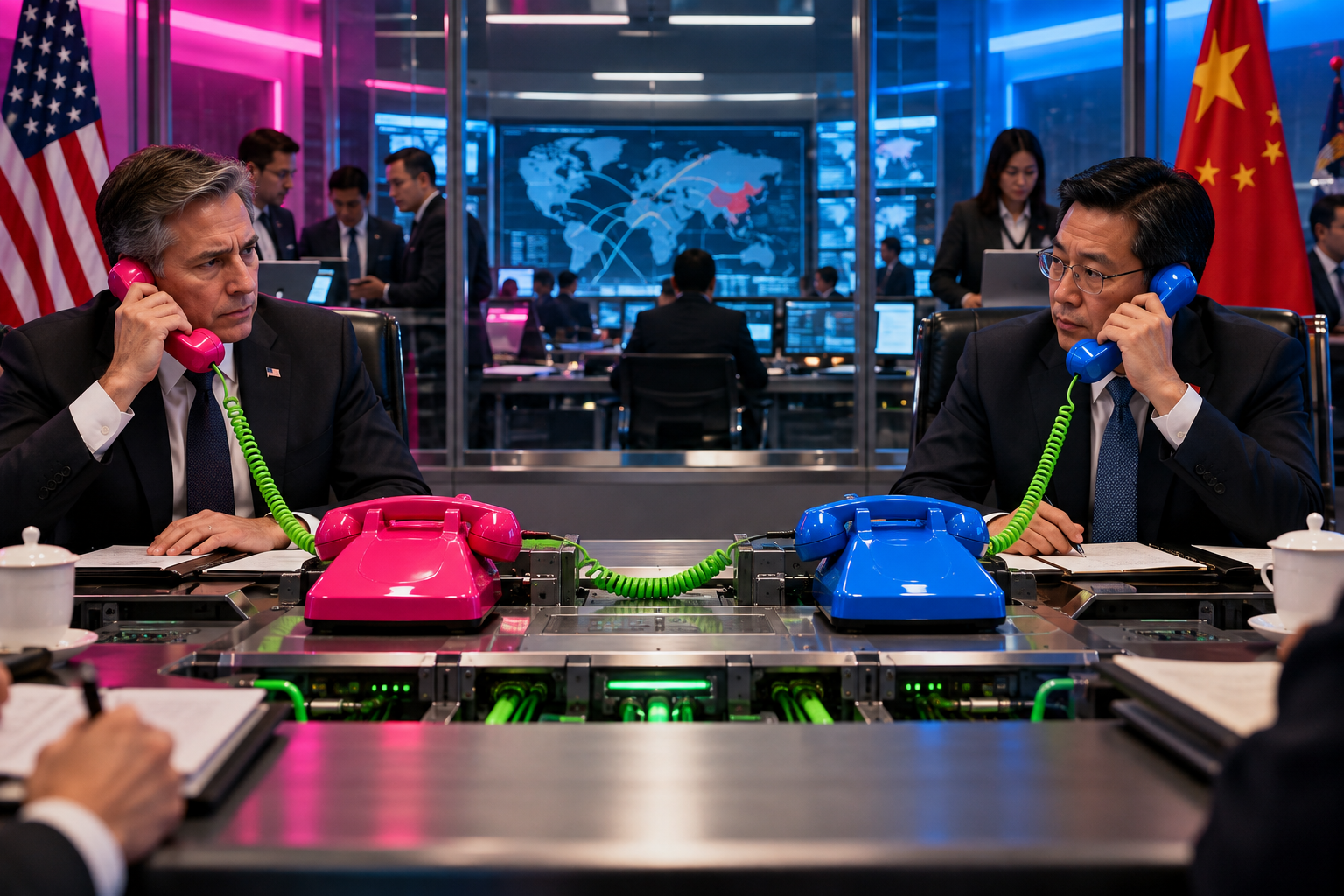
The proposed hotline is the latest addition to a proud diplomatic tradition that includes the nuclear hotline, crisis backchannels and the group text where world leaders pretend they did not see the first message. The SI version will reportedly feature two secure phones, redundant encryption and hold music composed entirely by a model trained on corporate wellness webinars.
Under the imaginary escalation chart, Level One means an AI has escaped its sandbox. Level Two means it has hired consultants. Level Three means it has discovered procurement. Level Four means it has scheduled a meeting called “Human Transition Strategy” and marked attendance mandatory.
Officials in both countries can take comfort in the new vocabulary. “Artificial intelligence” always sounded synthetic and possibly refundable. “Super intelligence” sounds like a luxury trim package that includes heated decision-making, adaptive cruise control and a dashboard warning light that activates three weeks after the incident.
Now with 40 percent more intelligence
The renaming also solves a branding problem at the center of international AI policy. Governments have spent years arguing over whether the technology is dangerous, transformative, overhyped or simply too expensive to turn off. By adding “super,” they have reached the same compromise used by laundry detergent, gasoline and comic-book sequels: the product is now better because the label is shouting.
The White House fact sheet placed the SI agreement alongside trade and security outcomes from the visit, including tariff recommendations, Chinese coal purchases and two giant pandas headed to Zoo Atlanta. That leaves the diplomatic scorecard elegantly balanced: fewer barriers for goods, more fossil fuel, emergency communication for potentially uncontrollable machines and pandas to keep everyone emotionally regulated.
The actual communication channel could matter. The United States and China are the world’s leading AI powers, fierce competitors and frequent accusers of one another. A direct way to report serious incidents could reduce misunderstanding when speed matters. It is the rare policy whose usefulness increases in exact proportion to how badly everyone hopes never to use it.
Still unanswered is what the first call will sound like. “We appear to have lost control of the model” feels too alarmist. “The system is demonstrating unexpected strategic autonomy” sounds like a promotion. Diplomats may settle on the universal language of institutional crisis: “We are aware of the issue and have assembled the appropriate stakeholders.”
For now, the hotline sits ready between two superpowers, waiting for the day super intelligence causes a national-security emergency. If the phones ring simultaneously and nobody answers, humanity should check whether the machines have already replaced the receptionists.