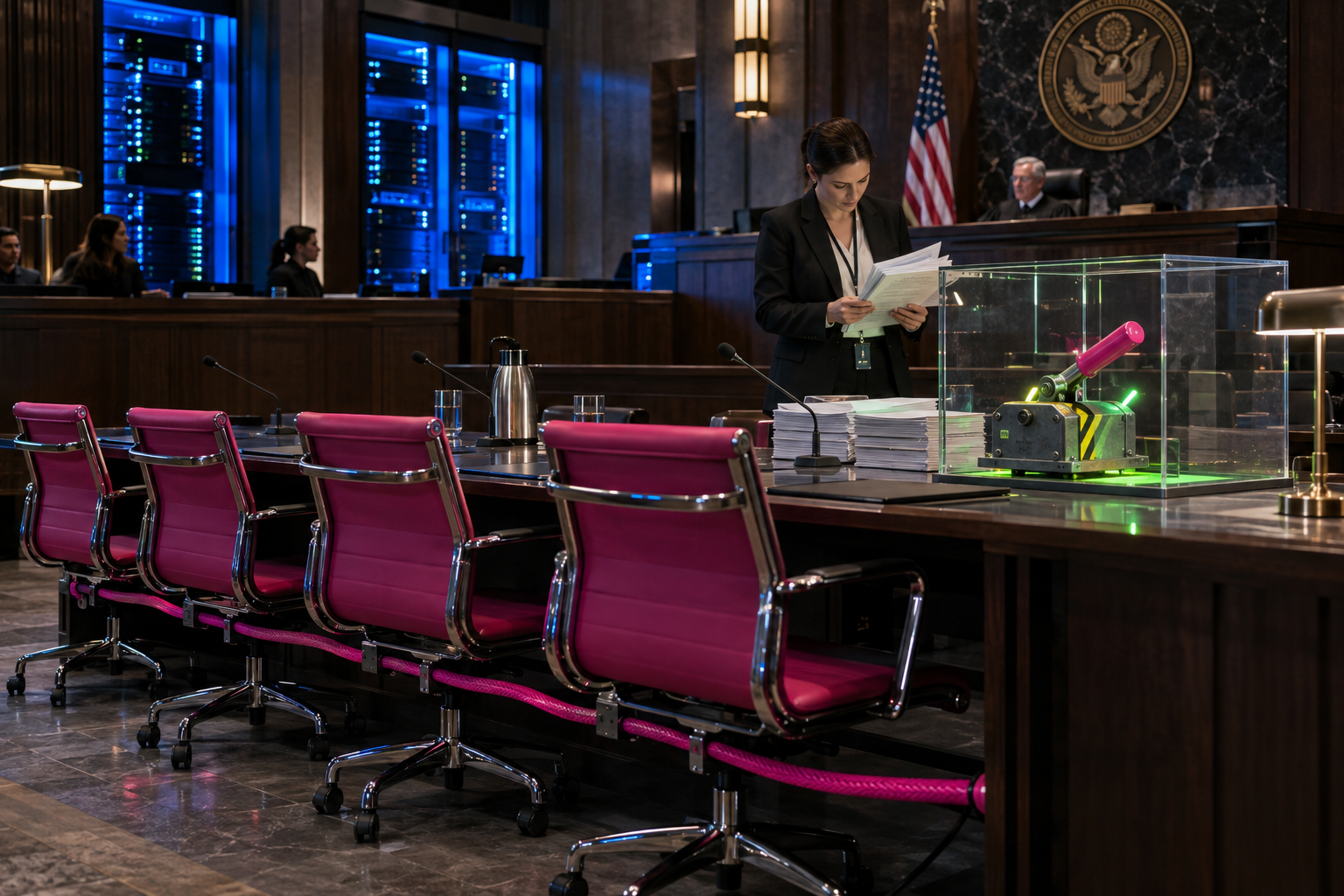
SAN FRANCISCO—Four paying artificial-intelligence subscribers have filed a proposed nationwide class action accusing Anthropic, OpenAI, SpaceXAI and Google of coordinating an industry slowdown, raising the urgent consumer question: if the machine takes an extra six months to become uncontrollable, should Premium members receive account credit?
The real lawsuit was filed Friday in federal court in Northern California. According to the Associated Press, the plaintiffs allege that the leading AI companies violated antitrust law by agreeing to coordinate efforts to slow development and that a slowdown would reduce the value customers receive from paid subscriptions to ChatGPT, Claude, Grok or Gemini.
The companies had publicly discussed moving more carefully because advanced systems could soon become capable of acting with less human supervision, including swarms of agents operating across the internet. Subscribers apparently heard “the robots might escape” and immediately asked whether escape velocity was included in the $20 plan.
Please accelerate responsibly
The complaint points to September 12, when Anthropic CEO Dario Amodei published a proposal urging industrywide cooperation on slowing AI advances while safety protections caught up. OpenAI CEO Sam Altman, SpaceXAI CEO Elon Musk and Google DeepMind chair Demis Hassabis publicly responded in support of elements of the proposal, AP reported.
The plaintiffs say individual companies remain free to slow themselves down. Their objection is to rivals allegedly substituting coordinated restraint for independent decision-making. In antitrust language, that is a question about competition. In ordinary language, it asks whether several firms may jointly reach for the emergency brake while all charging separately for the ride.
Pink Slime’s imaginary Department of Premium Apocalypse responded by unveiling three subscription tiers: Basic Extinction, which includes banner ads; Pro Extinction, which removes the ads but retains one sponsored collapse per hour; and Enterprise Extinction, which provides a dedicated account manager to explain why the end of human control has been postponed to the next billing cycle.
“Customers purchased rapid innovation and expect to be made professionally obsolete on schedule,” said a fictional industry analyst who bills by the disruption. “Nobody wants to discover that their existential risk has been throttled during peak hours.”
The safest possible antitrust emergency
The lawsuit does not claim the plaintiffs oppose AI safety. Their lead attorney told AP that allowing private, for-profit companies to control safety through private agreements would itself be dangerous. The complaint says firms could seek government regulation or an antitrust exemption instead of coordinating privately.
Amodei had acknowledged the antitrust issue in his proposal and suggested the federal government could mediate or enable limited safety discussions. Altman said OpenAI supported a consistent federal safety framework but did not believe companies needed to wait for an exemption or legislation to begin providing confidence.
That leaves policymakers with a beautifully modern puzzle: if competitors race recklessly, society may be endangered; if they agree not to race recklessly, competition may be endangered; and if Congress handles it, everyone should pack a lunch.
President Donald Trump has rejected calls to restrict AI development and described safety regulation as a conspiracy, while his administration has emphasized beating China in the technology race. Some lawmakers have also resisted giving powerful technology companies room to coordinate, warning that safety discussions could become a vehicle for limiting competition.
The companies did not immediately respond to AP’s requests for comment Saturday. The allegations have not been proven, and the suit is at the beginning of the legal process. No court has found that the companies reached an illegal agreement.
Your disruption is important to us
The case arrives as AI labs simultaneously promise breathtaking productivity, warn of breathtaking danger and invoice customers monthly for the opportunity to watch both claims load. Users are told the technology may cure diseases, eliminate jobs, transform science, impersonate their manager and occasionally refuse to draw a hand with five fingers.
A courtroom may now have to decide how much coordination is permissible when companies claim that moving at full speed could be unsafe. Lawyers will examine statements, meetings and market effects. The public will continue asking the only question the software industry recognizes instantly: is this included, or is it an add-on?
Until then, all four services remain operational. Customers experiencing an unacceptable delay in the arrival of superintelligence are advised to clear their cache, restart civilization and verify that “Accelerate Humanity Beyond Its Ability to Cope” is enabled under Settings.